The Bubba Supply MRO supplier portal uses Perplexity and Gemini AI in development and where applicable.
A B2B procurement search portal for Maintenance, Repair, and Operations parts when procurement is operating in an environment of acute urgency — and where a missing $20 seal can halt a multi-million dollar production line.

TERMS OF USE
Your interactions with individuals, service providers, or companies listed, linked, or advertising at the Bubba Supply directory, including personal information disclosures, payments and delivery of goods or services, and any other terms, conditions, warranties or representations associated with such dealings, are solely between you and said persons not associated with Bubba Supply. You should always take all necessary precautions before proceeding with any personal information disclosures, online or offline transactions with any of these third parties.
Supply Chain News Organizations: What They Do and Why They Matter
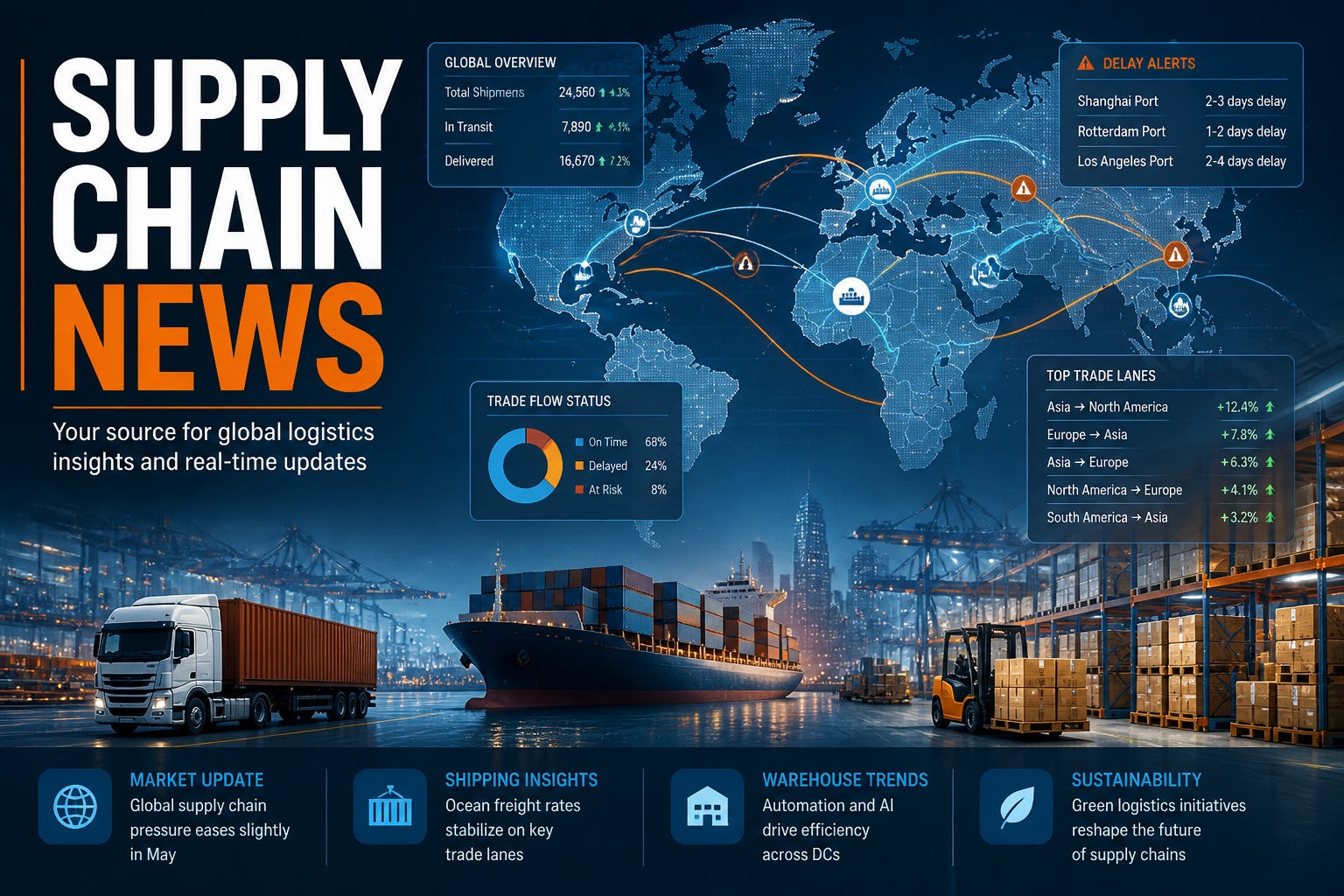
Supply chain news organizations play a vital role in keeping logistics professionals informed, connected, and ready to respond to change. In an industry where disruptions can happen quickly, these publications and media platforms help companies track trends, monitor risks, and make better decisions.
What Are Supply Chain News Organizations?
Supply chain news organizations are media outlets that report on logistics, transportation, procurement, warehousing, trade, manufacturing, and supply chain technology. They publish news stories, analysis, interviews, newsletters, podcasts, webinars, and research that help industry professionals stay current.
These organizations are not just journalists covering headlines. They often serve as knowledge hubs for shippers, carriers, warehouse operators, suppliers, consultants, and technology providers who need reliable information to run their businesses effectively.
What They Do
Supply chain news providers cover a wide range of topics that affect the movement of goods and the performance of global networks. Their work often includes reporting on freight markets, port congestion, labor issues, inventory planning, policy changes, and emerging technologies.
Many also publish expert commentary, rankings, buyer guides, and case studies. This makes them useful not only for reading the news, but also for researching vendors, comparing strategies, and learning how other companies solve similar problems.
Why They Matter to the Logistics Industry
The logistics industry depends on timely information. A change in fuel prices, trade policy, weather, labor availability, or shipping capacity can affect operations almost immediately. Supply chain news organizations help professionals understand those shifts before they turn into bigger problems.
They also support strategic planning. Leaders use these sources to identify market trends, evaluate risks, and make investment decisions related to transportation, warehousing, software, automation, and supplier relationships.
Another important role is education. As logistics becomes more data-driven and technology-enabled, these publications help explain new tools and concepts in plain language so teams can adopt them more effectively.
Best Supply Chain News Resources
Top Ten Supply Chain News Providers
Here are ten well-known supply chain news providers with links to their websites:
- Supply Chain Digital
- Supply Chain Dive
- SupplyChainBrain
- Supply Chain Management Review
- Supply Chain 24/7
- Logistics Management
- Inbound Logistics
- DC Velocity
- The Loadstar
- Procurement Magazine
How To Choose the Right Sources
The best mix of supply chain news sources depends on your role. Operations teams often benefit from logistics and freight-focused outlets, while procurement teams may prefer sourcing and supplier coverage. Technology teams may want publications that cover automation, AI, visibility tools, and software trends.
A good approach is to follow a few broad industry publications alongside a few niche ones. That gives you both the big picture and the specialized detail needed to stay ahead of disruptions and opportunities.
Conclusion
Supply chain news organizations are essential to the logistics industry because they turn fast-moving events into practical insight. They help professionals respond faster, plan smarter, and stay informed in an environment where timing and visibility matter.
Whether you are managing freight, sourcing suppliers, running warehouses, or evaluating technology, the right supply chain news sources can improve decision-making and keep your organization competitive.
B2B procurement portals for Maintenance, Repair, and Operations (MRO) parts is uniquely challenging. Unlike traditional B2B e-commerce where orders are predictable and planned weeks in advance, MRO procurement operates in an environment of high SKU volume, fragmented data, and acute urgency—where a missing $20 seal can halt a multi-million dollar production line.
When these portals fail during a launch, the root causes typically split down two distinct lines: the technical infrastructure and the operational realities of the end-users.
Technical Failures: The Digital Cracks
1. The “Garbage In, Garbage Out” Master Data Trap
MRO catalogs routinely scale to hundreds of thousands of SKUs, often sourced from thousands of legacy spreadsheets and disparate vendor feeds.
- The Failure: Launching without rigorous data cleansing and normalization. Part numbers get duplicated, descriptions are written in fragmented shorthand (e.g.,
"Smns 3Pole Contactor"vs."Siemens Contctr 3P"), and critical technical specifications are left unmapped. - The Result: The search bar becomes completely non-functional. If an engineer or technician cannot find the exact replacement part using standard parametric filtering, they abandon the portal immediately.
2. Brittle PunchOut and OCI Integrations
Enterprise buyers expect the new portal to integrate directly into their own internal e-procurement or Enterprise Asset Management (EAM) platforms (like SAP Ariba, Coupa, or Maximo) via PunchOut (cXML) or Open Catalog Interface (OCI) protocols.
- The Failure: Treating these integrations as generic APIs rather than highly customized corporate data flows. Common missteps include failing to account for client-specific contract pricing schemas, mismatched unit-of-measure (UOM) mappings, or cart transfer timeouts.
- The Result: Procurement workflows stall at the checkout screen, forcing buyers to fall back on manual purchase orders.
3. Batch-Synced Inventory and Lack of Parametric Search
In MRO, a buyer rarely cares about an item’s aesthetics; they care about its dimensions, tolerance, voltage, and immediate availability.
- The Failure: Utilizing standard retail-style e-commerce architectures that rely on daily batch-syncs for inventory levels, combined with a lack of rich parametric facet searching.
- The Result: A technician orders a critical bearing shown as “In Stock,” only to receive an out-of-stock notification three hours later. In a factory downtime scenario, this lag is catastrophic.
Operational Failures: The Process Roadblocks
1. Misaligned Incentives (Corporate Procurement vs. Plant Maintenance)
A major operational blind spot is designing a portal that satisfies corporate headquarters but alienates the frontline staff actually fixing the machinery.
- The Failure: Building overly complex, multi-tiered approval workflows inside the portal to enforce spend compliance, without a fast-track mechanism for emergency “hot-orders”.
- The Result: Internal adoption plummets. To get a down machine back online, maintenance teams will completely bypass the portal and engage in “maverick spend”—using corporate credit cards to buy parts from local distributors over the phone.
2. High Supplier Onboarding Friction
A portal is only as strong as the supplier network actively feeding it accurate data, lead times, and stock levels.
- The Failure: Designing a rigid, manual supplier portal that forces distributors to manually input extensive item details or adapt to impossible formatting rules.
- The Result: Supplier Portal Desertion. Vendors refuse to engage or upload partial, outdated catalogs. The marketplace becomes a ghost town of incomplete listings and unvouched pricing.
3. Opaque Lead-Time and Logistics Tracking
Knowing when a part will arrive at the plant gate is frequently more critical than how much it costs.
- The Failure: Lack of granular tracking for partial shipments, backorders, and cross-border customs statuses within the portal workflow.
- The Result: If a ten-part maintenance kit is shipped with one critical element backordered, and the system fails to clearly isolate and flag that delay, the entire scheduled maintenance window is compromised.
At a Glance: Technical vs. Operational Failure Modes
| Failure Area | Primary Root Cause | Operational Impact | High-Risk Factor |
| Master Data (Tech) | Unstructured legacy data & zero naming normalization. | Users can’t locate parts; high search abandonment rates. | Extreme (MRO catalogs are notoriously messy). |
| PunchOut/OCI (Tech) | Rigid config that ignores client-specific ERP variations. | Broken cart transfers and manual order rollbacks. | High (Enterprise clients expect seamless procurement). |
| Workflow Design (Ops) | Bureaucratic compliance blocking emergency hot-orders. | Widespread “maverick spend” and shadow purchasing. | High (Directly clashes with plant uptime incentives). |
| Supplier Portal (Ops) | Complex onboarding interfaces and rigid file structures. | Outdated pricing, ghost listings, and missing specifications. | Medium-High (Suppliers lack the resources to jump through hoops). |
The Golden Rule of MRO Portals: Optimization at the top (corporate procurement) means nothing if it creates friction at the bottom (the maintenance floor). Balance strict technical data governance with an operational workflow that respects the urgency of field operations.
*********** iCode Admin (prefix)